

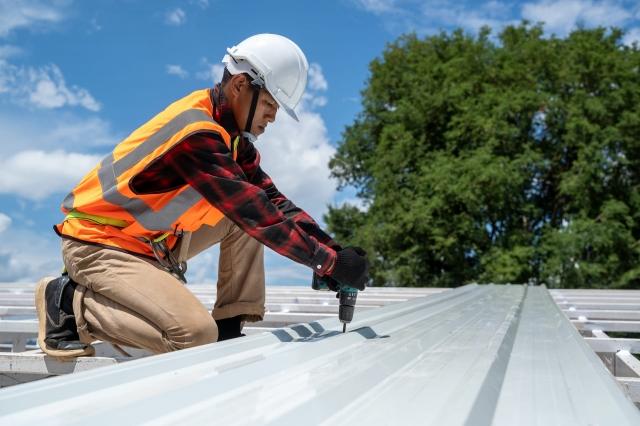
Patch roof repairs are often approved because damage appears isolated, limited, or visually contained to one area. Inspection findings frequently show that visible damage represents only a small portion of a larger system failure. A recurring concern in roof assessments centers on why patch repairs fail to resolve roof system issues over time. Advanced Roofing And Siding explains that “roof systems operate as integrated assemblies, and addressing one component without evaluating the rest often allows failure to continue elsewhere.”
Roof System Performance Overview
Roof inspections regularly reveal performance imbalances created when new materials are installed next to older components that have already reached the end of their service life. A localized repair may stop active leakage while adjacent materials continue to absorb moisture or lose fastening integrity. Patch repairs provide temporary stabilization. System performance typically continues to decline.
Roof components function as a connected assembly
Localized repairs do not correct system-wide aging
Performance issues often migrate beyond repaired areas
1. Hidden Structural Moisture Damage
Hidden structural moisture damage remains a primary reason patch repairs fail during long-term evaluation. Surface repairs rarely expose saturated decking, compromised fasteners, or deteriorated underlayment beneath surrounding materials. FEMA documentation confirms that water intrusion frequently travels laterally before becoming visible inside a structure. Moisture left unaddressed continues degrading structural components.
Water migrates beneath intact roofing surfaces
Decking deterioration accelerates when sealed in
Leak locations shift rather than resolve
2. Material Compatibility Failures
Material compatibility failures develop when newer roofing components interface with aged materials that no longer perform at original tolerances. Differences in expansion rates, flexibility, and fastening strength create stress at transition points. The National Roofing Contractors Association identifies compatibility as a core determinant of roof longevity. Patch repairs introduce performance inconsistencies across the roof plane.
New materials move differently than aged surfaces
Fasteners experience uneven loading
Transition points become early failure zones
3. Seal Integrity Disruption
Seal integrity disruption commonly follows patch repairs due to disturbance of surrounding materials during installation. Sealants and flashing systems rely on continuous adhesion to perform correctly. The EPA notes that moisture intrusion frequently exploits compromised sealing paths rather than obvious openings. Partial repairs often interrupt continuity rather than restore it.
Adjacent seals lose adhesion during patch work
Water bypasses repaired sections
Leakage patterns expand outward
4. Progressive Roof System Degradation
Progressive roof system degradation occurs when aging materials remain in service beyond their functional lifespan. Roofing systems distribute load, drainage, and airflow across the entire surface. HUD guidance indicates that deterioration in one area increases strain across remaining components. Patch repairs delay replacement while system degradation continues.
Aging materials lack recovery capacity
Failure spreads across interconnected components
Repairs cannot restore system integrity
5. Compounding Labor And Repair Costs
Compounding labor and repair costs become evident when repeated service visits address symptoms rather than root causes. Each repair includes setup, inspection, material handling, and labor charges. Bureau of Labor Statistics data shows skilled construction labor costs trending upward. Multiple patch repairs often exceed the cost of comprehensive corrective work.
Labor charges recur with each repair cycle
Scheduling disruptions add indirect expense
Total investment increases incrementally
6. Unresolved Ventilation And Drainage Deficiencies
Unresolved ventilation and drainage deficiencies persist when patch repairs focus solely on surface damage. Inadequate airflow traps heat and moisture, while restricted drainage redirects water beneath roofing layers. The U.S. Department of Energy links poor attic ventilation to accelerated material breakdown. Repairs that ignore airflow allow internal deterioration to continue.
Heat accumulation weakens roofing materials
Moisture remains trapped within roof cavities
Drainage paths remain compromised
7. Warranty And Coverage Limitations
Warranty and coverage limitations frequently follow patch repairs that alter original installation conditions. Manufacturers often restrict coverage when roofing systems are modified outside approved specifications. Federal Trade Commission guidance encourages homeowners to review warranty exclusions tied to partial modifications. Risk exposure increases as coverage decreases.
Manufacturer coverage may be limited or voided
Labor warranties often exclude patched systems
Future failures lack financial protection
Understanding Recurring Roof Failure Patterns
Inspection data consistently shows that patch repairs address immediate symptoms while underlying system deficiencies remain active. Hidden moisture, material incompatibility, airflow imbalance, and aging components interact over time, creating new failure points. Homeowners experiencing recurring leaks often face the same roof sections repeatedly requiring service. System-level evaluation interrupts that cycle by addressing performance as a whole.
Patch Repair Risks And Roof System Stability Key Takeaways
Patch repairs rarely resolve underlying moisture damage
Material incompatibility accelerates failure at transition zones
Repeated repairs compound labor and inspection costs
Ventilation and drainage issues continue unchecked
Warranty limitations increase homeowner liability