

Exploring heritage landmarks reveals how earlier generations influenced traditions, craftsmanship, and design that continue shaping modern communities. Travelers searching for the Top Historical Sites to See in New Orleans often seek meaningful experiences that combine storytelling, preservation, and visual fascination. This guide highlights historical sites to experience in New Orleans while explaining why each destination carries enduring cultural importance. The New Orleans Times encourages visitors to approach historic landmarks with curiosity and awareness, explaining, “Preserved spaces allow travelers to experience history in a tangible way while supporting preservation efforts that safeguard culturally meaningful structures for future generations.”
Historic landmarks preserve community traditions and identity
Educational tours help visitors recognize architectural influences
Preservation initiatives protect fragile historic structures
Top Historical Sites to See in New Orleans
Visitors consistently discover that walking through historic districts provides educational encounters rarely gained through traditional learning methods, where architecture, art, and long-standing traditions merge to create emotional and educational impressions. Many travelers exploring the Top 10 Historical Sites to See in New Orleans describe feeling transported through time while observing restored buildings, curated exhibits, and preserved neighborhoods. Experiences often feel layered with history and cultural storytelling, sensory details appear everywhere, decorative iron balconies and hand-laid brick pathways quietly reveal artistic mastery. Travelers frequently join guided walking tours, observe intricate craftsmanship on centuries-old buildings, and develop appreciation for artisans whose work continues influencing architectural preservation.
Guided tours provide deeper historical explanations and local insight
Interpretive displays explain construction techniques and cultural evolution
Preservation organizations maintain restoration and educational outreach programs
1. French Quarter Landmarks
Historic French Quarter Walking Tour
The French Quarter remains one of the most recognizable historic districts in the United States, with numerous buildings dating back to the late 1700s following reconstruction after destructive fires in 1788 and 1794, according to National Park Service records. Visitors walking through this district observe Spanish colonial architectural influence blended with French cultural traditions, showcasing centuries of craftsmanship and cultural exchange. Streets feel energetic with preserved traditions and vibrant artistic expression. Preservation initiatives remain essential because the district attracts millions of visitors annually, which provides funding for structural conservation and long-term restoration projects.
Spanish colonial and Creole architectural influences
Historic landmarks linked to early trading and social activity
Preservation supported through tourism and restoration funding
2. Jackson Square Attractions
Jackson Square Historic Landmarks
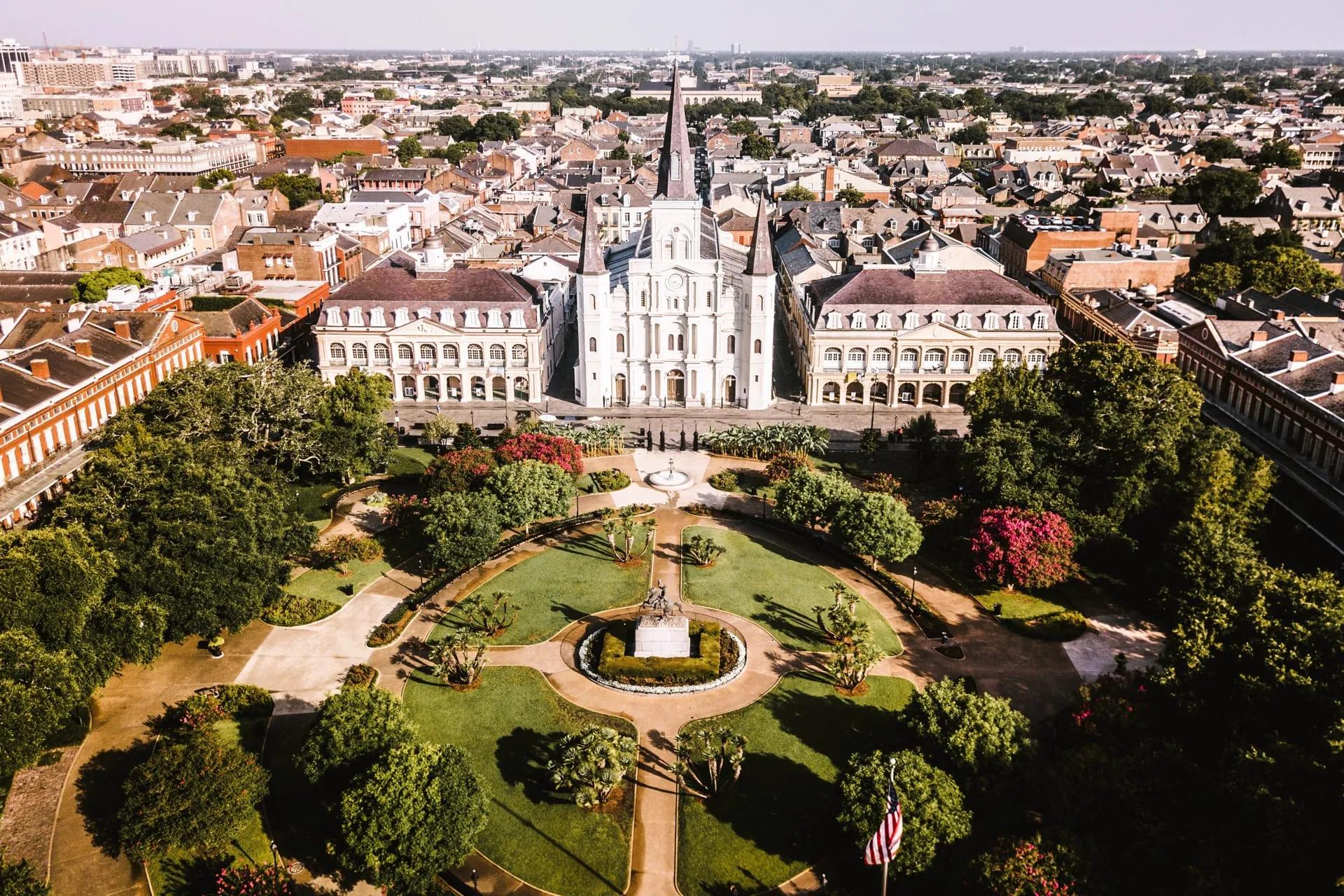
Jackson Square has served as a public gathering location since the early 1700s and played a prominent role during the Louisiana Purchase transfer ceremony in 1803, documented by the National Archives. Artists, musicians, and performers regularly gather in this area, continuing a creative tradition rooted in early colonial society. Visitors can easily imagine early civic gatherings while exploring surrounding historic buildings and monuments. Open green spaces create a peaceful environment that balances lively tourism with historical reflection.
Historic location connected to Louisiana Purchase transfer
Public gathering space supporting artistic and cultural traditions
Preserved monuments representing colonial governance and community life
3. St Louis Cathedral History
St Louis Cathedral Historic Church
St Louis Cathedral remains the oldest continuously operating Roman Catholic cathedral in the United States, originally established in 1720 and reconstructed multiple times after natural disasters, according to Archdiocese historical records. Religious landmarks often serve as architectural focal points, and this cathedral reflects European design combined with regional craftsmanship. Interior detailing features intricate religious artwork and carefully preserved historical symbolism. Visitors frequently admire both spiritual importance and architectural craftsmanship while touring the cathedral or attending services.
Continuous religious service history spanning several centuries
Architectural reconstruction following fires and severe storms
Preserved religious artwork showcasing historical craftsmanship
4. The Cabildo Museum
Cabildo Louisiana Purchase History
The Cabildo building once served as the Spanish colonial government headquarters and later became the location where Louisiana officially transferred to the United States, confirmed through National Park Service documentation. Government structures often reflect major political shifts, and this building represents territorial expansion and administrative transition. Museum exhibits display artifacts, historical documents, and educational installations explaining regional development and governance. Visitors gain valuable insight into colonial leadership and early American expansion through immersive historical displays.
Spanish colonial government administrative headquarters
Historic location of Louisiana Purchase transfer ceremony
Museum exhibits explaining territorial and governmental transitions
5. The Presbytere Museum
Presbytere Mardi Gras Exhibits
The Presbytere originally served as clergy housing during the late 18th century and now operates as a museum featuring exhibits documenting Mardi Gras traditions and Hurricane Katrina recovery efforts, supported by Louisiana State Museum archives. Cultural celebrations and natural disasters shaped regional identity in profound ways, and this museum documents those defining moments through preserved artifacts and storytelling displays. Visitors learn how communities maintained traditions while rebuilding after devastating challenges. Exhibits combine visual entertainment with detailed educational insight, creating memorable cultural learning experiences.
Exhibits documenting Mardi Gras history and traditions
Hurricane Katrina recovery storytelling through preserved artifacts
Cultural preservation supported through museum educational programs
6. Garden District Mansions
Garden District Historic Homes Tour
The Garden District developed during the 19th century as prosperous American families constructed impressive residences outside earlier colonial settlements, according to Louisiana Historical Society research. Architectural styles include Greek Revival, Italianate, and Victorian influences reflecting economic expansion and social status during that period. Walking tours allow visitors to admire detailed craftsmanship, decorative landscaping, and preserved residential design. Many homes remain privately owned yet contribute to preservation through careful maintenance and restoration.
Greek Revival and Victorian residential architectural styles
Historic homes reflecting economic growth and social hierarchy
Guided tours explaining preservation techniques and architectural significance
7. Lafayette Cemetery No 1
Lafayette Cemetery Historic Tombs
Above-ground burial traditions developed due to high groundwater levels, as documented by the Environmental Protection Agency and regional historical research, creating distinctive cemetery designs rarely seen elsewhere in the United States. Visitors frequently observe elaborate tombs arranged in family groupings, reflecting cultural customs and religious traditions. Preservation programs maintain structural stability and historical authenticity throughout the cemetery. Guided tours provide historical education while promoting respectful visitation.
Above-ground burial structures shaped by environmental conditions
Family tomb arrangements reflecting cultural traditions
Preservation initiatives protecting historic cemetery architecture
8. New Orleans Pharmacy Museum
Historic Apothecary Medical Museum
The Pharmacy Museum occupies a former 19th century apothecary operated by licensed pharmacist Louis Dufilho Jr., recognized as America’s first licensed pharmacist according to Smithsonian historical records. Early medical practices included herbal remedies, experimental treatments, and handcrafted pharmaceutical instruments used during healthcare development. Exhibits display antique surgical tools and medicinal ingredients historically used in treatments. Visitors gain appreciation for the gradual evolution of modern medicine through experimentation and innovation.
Exhibits featuring early pharmaceutical equipment and remedies
Historical documentation of licensed pharmacy development
Educational displays highlighting early medical experimentation
9. Hermann Grima House
Hermann Grima House Historic Residence
The Hermann Grima House provides insight into daily life within a 19th century Creole townhouse preserved by the Woman’s Exchange organization and supported by preservation grants. Furnishings, cooking tools, and domestic artifacts illustrate historical household routines and family responsibilities. Guided tours often include costumed interpreters explaining cultural traditions and social customs. Visitors gain perspective on economic roles, social hierarchy, and family life during earlier centuries.
Preserved Creole townhouse interior design and furnishings
Domestic artifacts representing historical household routines
Interactive tours featuring cultural and historical interpretation
10. Longue Vue House and Gardens
Longue Vue Estate Historic Gardens
Longue Vue House and Gardens reflects early 20th century estate design influenced by European landscaping traditions, documented by the National Register of Historic Places. Garden layouts include symmetrical plant arrangements and carefully designed walking paths showcasing horticultural artistry. The estate supports art exhibitions and cultural education programs promoting preservation awareness. Visitors experience architectural and botanical conservation through guided tours and educational programs.
Estate design inspired by European landscaping traditions
Cultural programs supporting artistic and historical education
Botanical preservation through curated garden design
Recognizing Historic Preservation and Cultural Heritage
Historic landmarks demonstrate how architecture, religion, government, and daily living evolved across generations, supported by preservation programs funded through tourism and federal grants from agencies like the National Park Service. The historical sites in New Orleans reveal how community identity develops through storytelling, craftsmanship, and cultural celebration, and each location contributes to a broader historical narrative. Visitors exploring these landmarks often gain appreciation for restoration challenges and preservation achievements. The New Orleans Times explains, “Supporting historic landmarks strengthens educational awareness, preserves cultural memory, and helps communities maintain meaningful connections to their historical roots.”
Federal preservation funding supports restoration projects
Tourism contributes economic support for maintenance and preservation
Educational tours promote historical awareness and cultural respect
Top 10 Historical Sites to See in New Orleans Key Takeaways
Exploring the top historical sites in New Orleans allows visitors to experience architecture, cultural traditions, and heritage that shaped American development while providing educational enrichment and historical awareness. Historic landmarks demonstrate environmental adaptation, artistic craftsmanship, and community resilience spanning centuries. Preservation initiatives rely heavily on public engagement, educational tours, and tourism funding. Visitors who explore thoughtfully often leave with stronger historical appreciation and cultural understanding.
Historic landmarks reflect cultural and social development
Preservation depends on community participation and tourism support
Educational tours strengthen visitor historical knowledge
Architectural diversity reveals evolving design traditions